Feeding and Survival in 1860 Bavaria
In 1858, Bavaria ordered its district physicians to describe how families fed their newborns. We machine-transcribed all 26,325 digitized manuscript pages and checked the relevant passages against the images. In the 26 districts that reported both feeding practice and a birth-based death rate, the median first-year death rate was 23% where mothers nursed and 40% where breastfeeding was short, mixed, or rare.
Status: professional review open. LLM agents checked every quotation and count against the page images; a paleographer has not yet. What that means.
In 1860, the royal district physician in Roggenburg, a rural Swabian jurisdiction south of the Danube, finished a passage on infant care with three exclamation marks. First-year infants in his district, he wrote, rarely received breast milk. Families fed newborns coarse, paste-like flour gruel (Mehlbrei) and bread softened in water or pre-chewed and tied into a cloth rag (Schnullerbrod). In heavy-drinking households, parents dipped that pacifier straight into schnapps “so that they should sleep faster and longer!”
Farther north and west inside the same kingdom, the pattern flipped. In Uffenheim in Middle Franconia (roughly 140 km north of Roggenburg), the physician reported that nearly every mother nursed her child through the first year and often well into the second; 17.6% of children born died in their first year. In Landstuhl in the Bavarian Palatinate (roughly 230 km to the northwest), where breastfeeding also predominated, 16.3% of all children born died before age one, counting stillbirths in both deaths and births. Without the stillbirths, his counts give about 14.4% of live births. In four districts where physicians described short, mixed, or rare breastfeeding (Ottobeuren and Burgau in Swabia, Wörth an der Donau in the Upper Palatinate, and Eggenfelden in Lower Bavaria, by the physician’s verbal estimate), between 40% and 50% of newborns died within twelve months.
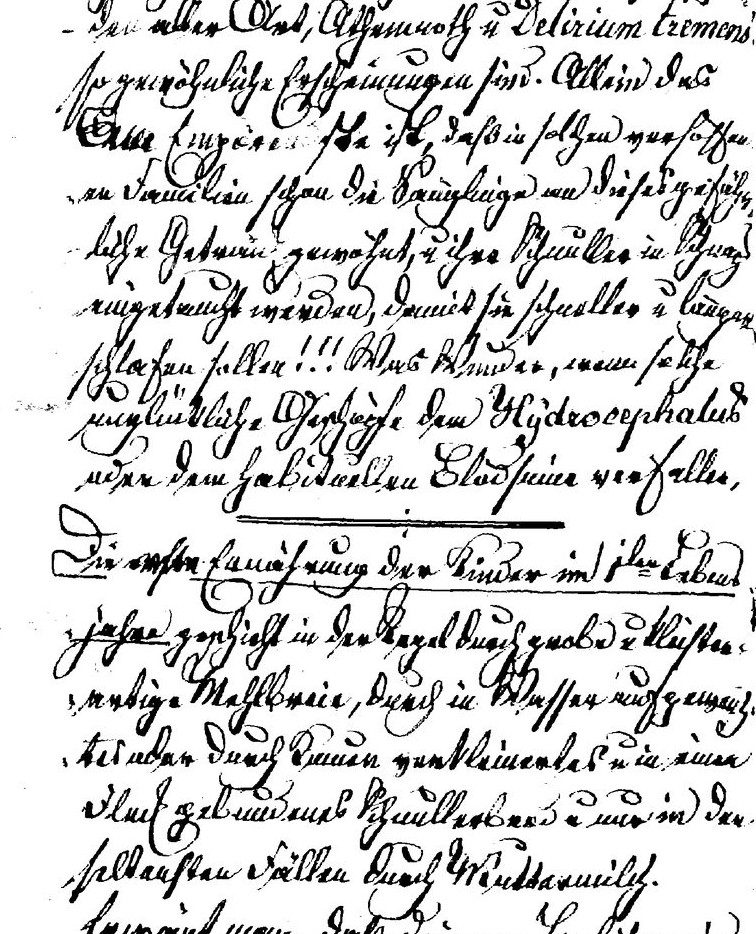
„Allein das Aller Empörendste ist, daß in solchen versoffenen Familien schon die Säuglinge an dieses gefährliche Getränk gewöhnt, u ihre Schnuller in Schnaps eingetaucht werden, damit sie schneller u länger schlafen sollen! [three exclamation marks in the ink] … Die erste Ernährung der Kinder im 1ten Lebensjahre geschieht in der Regel durch grobe u kleisterartige Mehlbreie, durch in Wasser aufgeweichtes oder durch Kauen verkleinertes u in einen Fleck gebundenes Schnullerbrod u nur in den seltensten Fällen durch Muttermilch.“
None of this divide is new to historical demographers. John Knodel and Etienne van de Walle (1967) and Hallie Kintner (1985, 1988) traced southern Germany’s non-breastfeeding belt through official statistics from 1869 onward. Kintner found that around 1910 the southeastern regions where most infants were never breastfed had Germany’s highest infant mortality. Knodel’s village studies (1968, 1988) followed the pattern into Bavarian parish records, Arthur Imhof (1981) compared regional infant mortality across Germany from the eighteenth century onward, and John Brown and Timothy Guinnane (2018) traced how Bavaria’s infant mortality fell from about 40 deaths per 100 births in the 1860s.
The 1858-1861 reports are older than most of those statistics and closer to the ground. Historians know them well. Lower Franconia, Swabia, and the Palatinate are fully edited in print, Upper Bavaria and the Upper Palatinate largely so, and many individual district reports have appeared in local publications. But the editions are spread across regional series, Lower Bavaria, Upper Franconia, and Middle Franconia still wait for complete editions, and no single machine-readable text covers every surviving report. Almost every page is written in Kurrent, the nineteenth-century German cursive that few modern readers can decipher without specialist training. This article reads the whole collection at once.
1.0 One ministerial order, 26,325 pages
On 21 April 1858, King Maximilian II’s interior ministry issued two ordinances instructing every salaried district court physician (Landgerichtsarzt) in Bavaria to write a standardized medical, topographic, and ethnographic description (Physikatsbericht) of his district. The questionnaire covered soil, climate, housing, clothing, diet, the feeding of children in their first year, the care of pregnant women and new mothers, prevailing diseases, and popular superstition (Aberglauben). Many physicians added local mortality figures.
For seven of Bavaria’s eight historical administrative regions (Regierungsbezirke), 212 bound manuscript volumes survive at the Bayerische Staatsbibliothek in Munich under call number BSB Cgm 6874 (Public Domain Mark 1.0). Upper Bavaria (Oberbayern) is absent from this collection because its reports passed to the Historischer Verein von Oberbayern and are preserved as a deposit in the Stadtarchiv München (Munich Municipal Archive). Splitting eleven collective volumes from Lower Franconia and the Palatinate along their internal report boundaries yields 239 canonical 1860 Physikatsbezirke.
To index the entire collection, we ran Kurrent Transcriber 1B (release stack re-v1) across all 26,325 digitized pages (10.23 million completion tokens; 8.54 seconds median per-page latency under batch concurrency). Consecutive-frame auditing flagged 498 duplicate or re-shot frames across seven volumes (363 in Bissingen and 130 in Lauingen; 493 share identical processed-image hashes), leaving 25,827 unique pages.
To estimate how well the model reads this collection, we drew a deterministic sample of 30 text-bearing interior pages from 30 different volumes. An LLM agent (Google’s Gemini 4 Carbon) first transcribed each page image without seeing the model output. The model’s text differed from that blind transcription by a median of 4.33% of characters (normalized character error rate). The agent then checked each disagreement against the ink, and the median fell to 3.45% (2.99% across the 25 pages of running prose).
Those reference texts come from an LLM agent, so the figures measure agreement with an LLM reference. Scores on the Kurrent Pages Benchmark use human references, so any comparison with them needs that caveat. The appendix gives the full design and limitations.
Machine transcription served for corpus-wide candidate discovery, never as unchecked evidence. For each of the 239 canonical jurisdictions, we pulled top candidate pages on infant feeding, gruel, pacifiers, sedatives, mortality, and goiter, downloaded the archival images locally, and had LLM agents (Gemini 4 Carbon, with Gemini 4 Neon for re-checks) check every coded field and quotation directly against the ink. For 226 reports, relevant archival pages were checked (for the other 13, the initial candidate pass retrieved no infant-feeding or mortality section). This yielded 191 documented infant-feeding accounts, and 217 of the checked rows log corrections the agent made to the machine text.
2.0 Two kingdoms of infancy
Mapped across all seven regions, the 191 documented infant-feeding reports divide Bavaria along a sharp boundary separating Franconia and the Palatinate from Swabia and Old Bavaria. It is not a simple river line: four Swabian Ries jurisdictions (Nördlingen, Wemding, Öttingen, and Wallerstein) lie north of the Danube yet follow the Swabian non-breastfeeding regime, while Bissingen and Donauwörth (Land) on the river breastfed.
map_bavaria_1860_infant_feeding.geojson in the companion dataset. Full-size map.| Region (1860 Regierungsbezirk) | Canonical districts | Feeding documented | Predominantly breastfed | Mixed or short | Rarely or not breastfed | Mehlbrei predominant | Pacifier noted | Birth-cohort IMR median (n) |
|---|---|---|---|---|---|---|---|---|
| Unterfranken und Aschaffenburg | 48 | 37 | 33 (89%) | 3 | 0 (0%) | 0 (0%) | 7 | 23.4% (6) |
| Pfalz (Palatinate) | 25 | 20 | 17 (85%) | 2 | 0 (0%) | 0 (0%) | 4 | 19.7% (5) |
| Oberfranken | 32 | 26 | 21 (81%) | 1 | 0 (0%) | 1 (4%) | 7 | 22.8% (4*) |
| Mittelfranken | 32 | 29 | 18 (62%) | 8 | 2 (7%) | 4 (14%) | 4 | 30.2% (10) |
| Oberpfalz und Regensburg | 32 | 22 | 15 (68%) | 5 | 1 (5%) | 3 (14%) | 12 | 40.5% (4*) |
| Niederbayern | 32 | 27 | 15 (56%) | 6 | 5 (19%) | 7 (26%) | 11 | 41.8% (2*) |
| Schwaben und Neuburg | 38 | 30 | 3 (10%) | 11 | 15 (50%) | 22 (73%) | 16 | 38.3% (6) |
| All seven regions | 239 | 191 | 122 (64%) | 36 (19%) | 23 (12%) | 37 (19%) | 61 | 29.5% (37) |
Table note: * marks small regional mortality samples (n < 5). Birth-cohort mortality covers only the 37 reports that give birth denominators, over observation periods from 1 to nearly 50 years; 18 further reports give only the infant share of all deaths and are excluded. Oberpfalz’s 40.5% median rests on four districts: Amberg (Land) 31.08%, Regensburg (Stadt) 34.94%, Regensburg (Land) 46.06% (stillbirths in the numerator), and Wörth a.d. Donau 47.4% (declining breastfeeding); neither Regensburg report describes feeding practice. Niederbayern’s 41.8% rests on two districts (Bogen 33.69% and Eggenfelden, approximately 50%). Pacifier counts depend partly on regional dialect vocabulary in candidate retrieval.
Combine the three northern and western regions (Lower Franconia, Upper Franconia, and the Palatinate): out of 83 documented jurisdictions, 71 (86%) were predominantly breastfed, none were rarely or never breastfed (0 of 83), and only one (Burgebrach) relied on Mehlbrei as the predominant early diet. Cross into Swabia (30 documented jurisdictions) and the distribution inverts: only 3 (10%, including Alpine Sonthofen) were predominantly breastfed, 15 (50%) rarely or never breastfed, and 22 (73%) raised newborns primarily on Mehlbrei.
Twenty-two of the 23 rarely-breastfed districts sit in Swabia (15), Lower Bavaria (5: Abensberg, Landshut Stadt, Rottenburg, Straubing Land, Straubing Stadt), the southern Upper Palatinate (Riedenburg), and southern Middle Franconia (Greding). The lone northern outlier is industrial Fürth in Middle Franconia, where mothers skipped both nursing and rural flour gruel in favor of bread, rusk, biscuit in milk, and commercial chicory or beetroot “surrogate coffee” (SurrogatCaffé).
The doctors’ prose puts texture behind those counts. In Augsburg, the district physician wrote that infant food “is and has always been here flour gruel, whose toughness not infrequently rivals that of the mothers’ prejudice against breastfeeding,” washed down with rock-candy sugar water through a rag pacifier or sucking-pot. In Ottobeuren, a numerical tally found that barely one-third of mothers nursed while 1,637 of 4,024 babies (40.68%) died in year one. In Riedenburg on the Altmühl, mothers often weaned after six weeks onto fresh water and Muß, watching healthy infants waste away from atrophy (“not exactly to the sorrow of the parents,” the doctor remarked); infants under age one accounted for 54.78% of all deaths in the district. In Eggenfelden in Lower Bavaria, where the physician estimated that nearly half of children died in year one, households cooked oversized pots of gruel and re-fed the leftovers a second and third time after sour fermentation, “as often as the child cries and as long as it keeps gulping it down.”
3.0 Sixteen to seventeen percentage points
Nineteenth-century physicians reported infant mortality under several non-equivalent definitions: postnatal deaths under age one per 100 live births (29 districts, including Eggenfelden’s verbal “fast die Hälfte” estimate), composite ratios per 100 total births (8 districts, two of which include stillbirths in the numerator, Landstuhl at 16.3% and Regensburg Land at 46.06%, and one of which, Ebermannstadt at 20.78%, counts deaths before compulsory smallpox vaccination), or infant deaths as a share of all deaths (18 districts). Pooling death shares with birth-cohort rates distorts comparisons, so the dataset keeps them in separate columns (imr_pct_of_births and infant_share_of_all_deaths_pct) with explicit stillbirth, approximate, and age-window flags.
Across the 26 districts that report both breastfeeding practice and a birth-cohort mortality rate (a nonrandom subset of the 239 jurisdictions), the feeding-survival gap holds across every stricter cut:
| Mortality slice | Predominantly breastfed | Mixed, short, or rare | Median gap |
|---|---|---|---|
| All birth-cohort rates (n = 26, Mann-Whitney AUC = 0.922) | 23.03% (n = 17, range 16.3%-33.7%) | 40.00% (n = 9, range 24.8%-50.0%) | +16.97 pp |
| Live-birth rates only (n = 22) | 24.05% (n = 15, range 17.6%-33.7%) | 40.00% (n = 7, range 24.8%-50.0%) | +15.95 pp |
| Live-birth rates, excluding approximate Eggenfelden (n = 21) | 24.05% (n = 15, range 17.6%-33.7%) | 39.45% (n = 6, range 24.8%-47.4%) | +15.40 pp |
| Within Mittelfranken alone (live births, n = 8) | 24.93% (n = 6, range 17.6%-30.3%) | 39.45% (Roth 40.0%, Weißenburg 38.9%) | +14.53 pp |
Table note: Landstuhl enters the first row at its reported 16.3% of total births and is left out of the live-birth rows, because the report gives counts that include stillbirths rather than a live-birth rate.
Even on the strictest live-birth subset excluding Eggenfelden, infant mortality rose by roughly two-thirds where breastfeeding weakened (24.05% to 39.45%), and no predominantly breastfed district in the corpus exceeded 33.7%. Because the breastfed sample clusters heavily in Franconia and the Palatinate, regional factors such as illegitimacy rates, maternal agricultural labor, climate, housing density, water supply, and sanitation also vary across the map. Kintner’s 1988 study of German regions around 1910 found that breastfeeding explained less of the regional variation in infant mortality than access to medical care, illegitimacy, and marital fertility. That makes the within-province and within-district contrasts especially revealing.
Inside Middle Franconia alone, the six predominantly breastfed districts with live-birth rates cluster between 17.6% (Uffenheim) and 30.3% (Altdorf, median 24.9%), whereas southern border districts with mixed feeding reach 38.9% (Weißenburg i. B.) and 40.0% (Roth). Within Roth itself, the physician contrasted the two halves of his district: around Roth, mothers nursed for 18 to 20 months and first-year mortality ran 30% to 36%; around the neighboring parish of Spalt, natural feeding belonged to “the rare exceptions,” artificial hand-feeding was the rule, and 50% of live-born infants died before age one. Farther south in Greding, the district physician documented a second within-district contrast between Gruppe Greding and Gruppe Stauf and proposed a surprising mechanical explanation.
These reports must also be read with source criticism. Royal district physicians were state-appointed, university-trained men answering a mandatory ministerial questionnaire. They frequently wrote with exasperation or disdain toward rural mothers, midwives, and poorer households. The same physician who described feeding practice also reported the death rate, and many explicitly blamed the deaths on the feeding, so the two columns are not independent observations: a doctor convinced that gruel killed infants may have described local feeding in darker terms where deaths were high. Observational contrasts like Roth and Spalt or Greding and Stauf also cannot isolate feeding from confession, settlement structure, wealth, or sanitation. These manuscripts are rich nineteenth-century clinical witnesses, not controlled trials.
4.0 Stiff bodices, sour rags, and sedatives
In the Greding half of his district, the physician blamed traditional stiff Mieder bodices (manuscript page 129, archival canvas 131). Those garments, he argued, did not merely constrict the ribcage: they pressed against the breasts and pushed the nipples so far inward that nursing became impossible or unbearably painful, driving mothers toward thick, half-cooked, lumpy Mehlbrei. In the Stauf half of the same district, women wore Leibchen of a different shape, and “this defect disappears because of the shape of the Leibchen.”
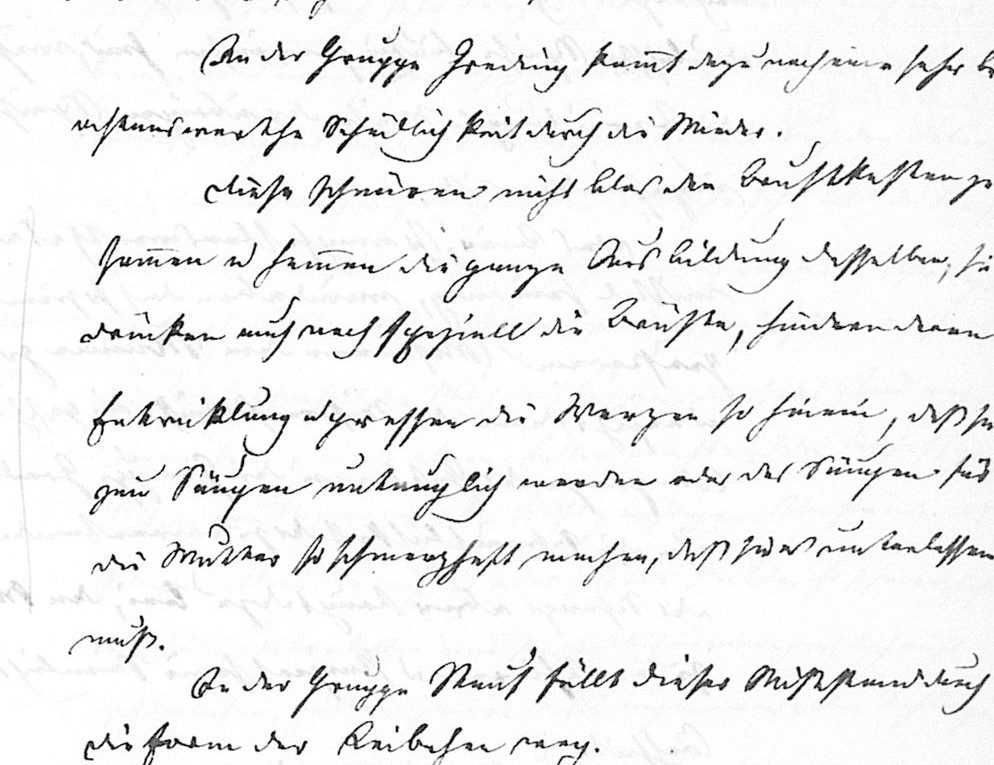
„In der Gruppe Greding kommt dazu noch eine sehr beachtenswerthe Schädlichkeit durch die Mieder. Diese schnüren nicht blos den Brustkasten zusammen u hemmen die ganze Ausbildung desselben, sie drücken auch noch speciell die Brüste, hindern deren Entwicklung u pressen die Warzen so hinein, daß sie zum Säugen untauglich werden oder das Säugen für die Mutter so schmerzhaft machen, daß sie es unterlassen muß. In der Gruppe Stauf fällt dieser Mißstand durch die Form der Leibchen weg.“
In Lower Bavaria, the physician for Landshut (Land) offered the same anatomical hypothesis independently, blaming stiff Mieder for flattening mothers’ nipples until they were “no longer suitable for nursing,” while noting that fewer than half of mothers in his district breastfed.
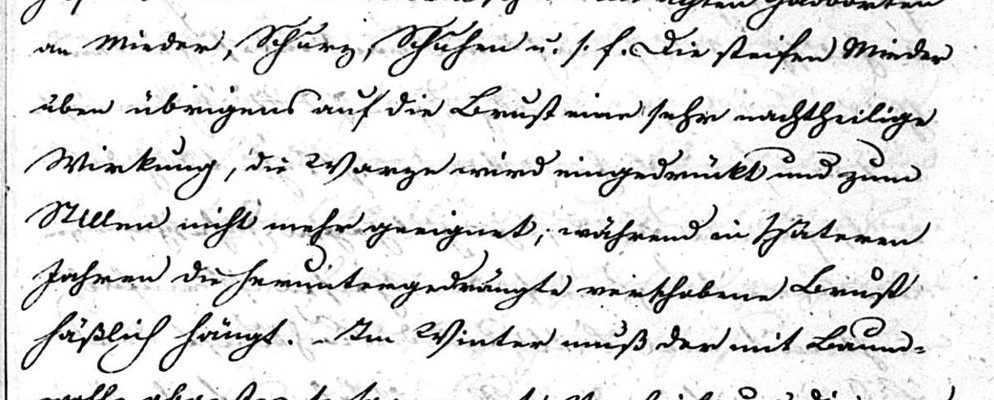
„Die steifen Mieder üben übrigens auf die Brust eine sehr nachtheilige Wirkung, die Warze wird eingedrückt und zum Stillen nicht mehr geeignet; während in späteren Jahren die heruntergedrängte weibliche Brust häßlich hängt.“
Where breast milk retreated, the cloth pacifier stepped in. Sixty-one verified reports note the Schnuller, Zulp, Zulze, Sauglappen, or Saugschlozer: a linen scrap stuffed with chewed bread, sugar, flour gruel, or in Alpine Sonthofen the crust scraped from the sides and bottom of the gruel pot. In Abensberg, the physician found these rags “in sour, almost putrid fermentation in the infants’ mouths right after birth.” In Burgau (44.55% first-year mortality), pacifiers dropped in the dirt went straight back into babies’ mouths.
A margin footnote in Roggenburg records the worst consequence of adults pre-moistening a pacifier. Some years earlier, a housemaid with syphilitic throat chancres moistened (annezte) her employers’ newborn’s pacifier in her own mouth. The baby developed chancres at both corners of the mouth and on the tip of the tongue, and while nursing infected its mother’s nipples with deep-eating chancres.
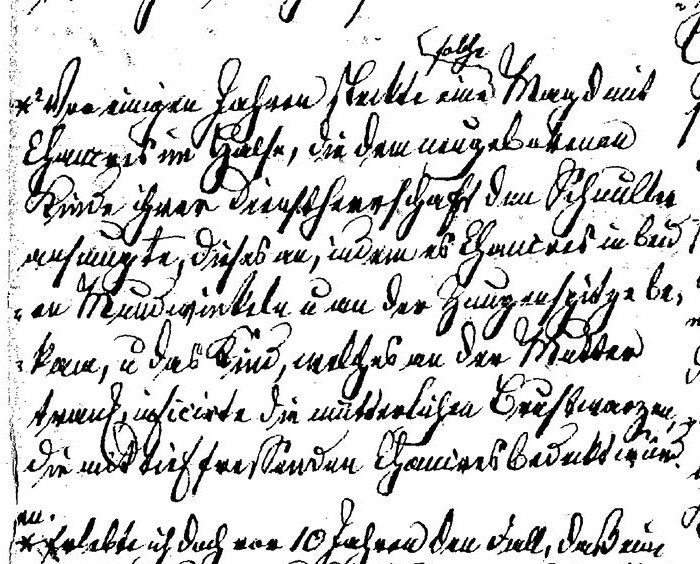
„Vor einigen Jahren steckte eine solche Magd mit Chancres im Halse, die dem neugeborenen Kinde ihrer Dienstherrschaft den Schnuller annezte, dieses an, indem es Chancres in beiden Mundwinkeln u an der Zungenspitze bekam, u das Kind, welches an der Mutter trank, inficirte die mütterlichen Brustwarzen, die mit tief fressenden Chancres bedeckt wurden.“
When babies still cried, some households reached for stronger quieters. Fifteen verified infant-feeding reports across Bavaria document alcohol given directly to infants or toddlers: schnapps-dipped pacifiers or bread crusts in Roggenburg, Bischofsheim (Rhön), Münchberg, Ludwigsstadt, Otterberg, and Markt Erlbach, and beer given from the mother’s mug or after weaning in Bayreuth (Land) (“six-month-old children drinking alternately from the breast and from the mother’s beer glass” at public vaccinations), Amberg (Land) (“small children seen completely intoxicated already in the forenoon”), Haßfurt, and Burgau.
In Bischofsheim in the Rhön mountains, the physician drew a direct parallel to urban wet-nurses: “just as in big cities many reckless wet-nurses mix opium into the milk to calm the infants in their care, mothers here put schnapps under the pacifier, which produces the same effect.”
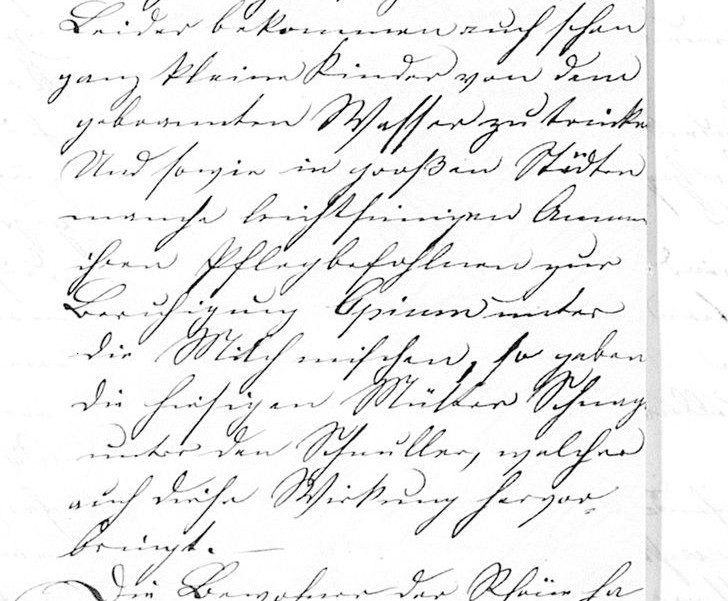
„Leider bekommen auch schon ganz kleine Kinder von dem gebrannten Wasser zu trinken. Und sowie in großen Städten manche leichtsinnige Ammen ihren Pflegbefohlenen zur Beruhigung Opium unter die Milch mischen, so geben die hiesigen Mütter Schnaps unter den Schnuller, welcher auch diese Wirkung hervorbringt.“
Two reports recorded poppy seeds or poppy-head decoctions given to infants for sleep. In Markt Erlbach in Middle Franconia, peasant women gave infants seeds of Papaver somniferum on bread or boiled to induce sleep. In Landstuhl in the Palatinate, despite high breastfeeding rates and low overall infant mortality, the physician warned that some mothers gave infants a decoction of poppy heads (Abkochung von Mohnköpfen) to quiet them, “through which cases of severe intoxication have already come before me.”
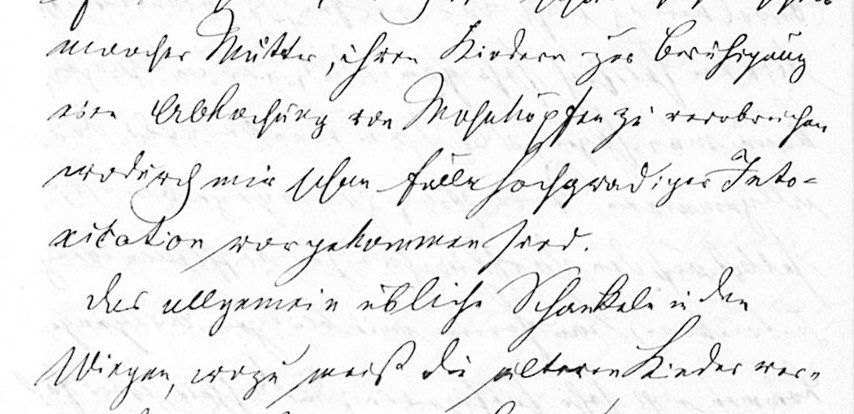
„mancher Mütter, ihren Kindern zur Beruhigung eine Abkochung von Mohnköpfen zu verabreichen, wodurch mir schon Fälle hochgradiger Intoxication vorgekommen sind.“
5.0 Thirty years of warnings
In the high-mortality districts of Swabia and the southern Upper Palatinate (Göggingen at 47.2% of live births, Wörth an der Donau at 47.4%, Regensburg Land at 46.06% including stillbirths, Burgau at 44.55%), district physicians were neither ignorant of the toll nor silent about it. In Öttingen in northern Swabia, where thirty years of parish figures (1830-1860) put first-year mortality at 35.92% of live births (359.23 deaths per 1,000), the physician summed up three decades of campaigning against thick flour gruel and the rag pacifier in a single sentence: “All efforts made for 30 years by the undersigned against this pernicious habit through instruction and admonitions in private and at public vaccination, as well as through the influence of pastors and midwives, have hitherto remained fruitless.”
A.1 How we read 26,325 pages
Every page image in BSB Cgm 6874 (212 volumes, 26,325 archival canvases, Public Domain Mark 1.0) was fetched via the Munich Digitization Center IIIF API and transcribed using Kurrent Transcriber 1B (13fragments, CC BY-SA 4.0, DOI 10.5281/zenodo.24342061) running the re-v1 release stack (vllm==0.23.0, transformers==5.13.0, pillow==12.3.0, numpy==2.4.6) with fp-v16 margin-surround masking.
The run produced 10,231,643 completion tokens at 8.54 seconds median per-page latency under batch concurrency (Google Colab account balance decreased by 32.60 compute units across the run). Repetition guards cut 176 pages (0.67%), 143 pages (0.54%) had run artifacts stripped, and 264 (1.00%) returned empty outputs. Consecutive-frame auditing flagged 498 duplicate or re-shot frames across seven volumes (363 in Bissingen and 130 in Lauingen; 493 share identical processed-image hashes).
To estimate in-corpus accuracy, we drew a volume-clustered random sample of 30 text-bearing interior pages (canvas number above 2, 80 to 450 model words, digit share below 12%, not a duplicate) across 30 distinct volumes (seed 18580421). Because eligibility filters on model output, blank sheets and catastrophic short or long failures are excluded from this slice.
An LLM agent, Gemini 4 Carbon (High) (gemini-4-carbon-high, run as subagents in Google’s Antigravity CLI on 24 November 2026), keyed all 30 pages blind from the images (4.33% median normalized character error rate, 95% CI 2.96% to 7.14%, mean 19.02%) and then adjudicated differences against the ink (28,929 reference characters, 4,129 words). Scored with the Kurrent Pages Benchmark normalization and alignment, the median adjudicated normalized character error rate was 3.45% (95% bootstrap CI 2.54% to 5.98%; median diplomatic character error rate 3.88%; median normalized word error rate 15.73%, 95% CI 10.87% to 19.86%).
Across the 25 running-prose sheets, the adjudicated median was 2.99% (3.19% blind; mean 4.41%, range 0.37% in Neumarkt to 18.46% in Lauf). Five non-prose sheets pulled the overall mean up to 18.27%: one hand-drawn district map (Wertingen, 68.66%), one ruled two-column trade table where the model emitted HTML <table> tags (Fürth, 217.95%), and three dense tabular spreads (Kastl Lit. B, Herzogenaurach, Ludwigshafen, 44.17% to 53.85%).
These references were made by an LLM agent, not by a human transcriber. The blind keying can share errors with the model, and the adjudication step can drift toward the model’s reading. Treat the figures as agreement with an LLM-agent reference until the paleographer review re-keys the sample. The benchmark normalization makes the arithmetic comparable, but not the reference quality.
A.2 What the model got wrong
Machine transcription enabled corpus-wide candidate discovery across 26,325 pages, but checking the ink caught real errors in nearly every hard hand (217 of 226 checked district entries log explicit ink corrections). Examples from the quotations in this article:
- Roggenburg (page 15): the model read Empörendste as Emperor este, versoffenen as vorhöffenen, Schnaps as Schmack, Kauen (chewing) as Rauen, and Schnullerbrod as Schnullerbeer.
- Roggenburg (page 27): it read annezte (moistened) as anmugte and beiden as leuen.
- Landstuhl (page 58): it read Mohnköpfen (poppy heads) as Mohntöpfen, Beruhigung (calming) as Berührung (touching), and Mißbrauch as Maßbrauch.
- Markt Erlbach (page 124): it read Branntwein as Beamtwein, Bauersweiber as Bauersväter, Brod as baxd, and gekocht as gekraft.
- Dense pages and tables: on several tightly written sheets (Bayreuth Land page 42, Otterberg page 33), the model stopped short of the bottom four or five lines; on ruled tables (Fürth page 43), it emitted HTML markup.
Those errors are why every quotation, count, and mortality rate in this article and its companion tables was checked directly against the BSB archival images.
A.3 What we have not confirmed yet
- Independent professional paleographer review is open. Gemini 4 Carbon (High) and Gemini 4 Neon (XHigh), running as LLM agents, checked every quotation, mortality row, and evaluation reference against the archival images; a human paleographer has not yet done so. Any changes found during professional review will be logged in the dataset changelog.
- No comparison with the printed editions yet. Lower Franconia, Swabia, and the Palatinate are fully edited in print. Comparing our readings and coded fields with those editions is the next check.
- Upper Bavaria (Oberbayern) is absent. Because BSB Cgm 6874 holds only the seven other Regierungsbezirke, Upper Bavaria’s reports (held as a deposit of the Historischer Verein von Oberbayern in the Stadtarchiv München) are outside this dataset.
- Candidate retrieval recall is unmeasured. Keyword candidate retrieval kept the top pages per district. For 13 districts it retrieved no infant-feeding or mortality section, and a wider dialect search after the audit surfaced unchecked candidate paragraphs in Hilpoltstein and Immenstadt. Regional pacifier counts may undercount dialect-specific terms.
- Ecological correlation is not single-cause proof. Regional covariates noted in the reports themselves (illegitimate birth shares, maternal field work, altitude, water quality, and sanitation) also varied alongside infant feeding, and the same physician reported both feeding and mortality.